This Blog is designed
for Mr. Pye's AP Economics
classes. It is meant to show
that Economics is not just a
vocabulary word in some
textbook, rather it plays a
vital role in every aspect of
our daily lives.
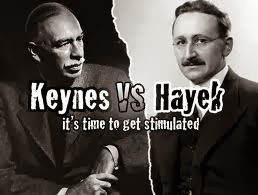
Identify at least 3 points from either Economist that you agree with. List the point and the video that it came from. Don't copy your classmates responses.
Read the following article about how the Swiss deal with the negative spillover costs associated with garbage. Answer the three questions at the end of the article. Your examples in #2 and #3 must be original and not copied from previous posts or no credit will be given.
A Biter's Market
In honor of Halloween, this is a nice little article about kids and incentives. Government policy makers are always looking for incentives to motivate us to act in a certain way. Read the article and respond to at least two of the five questions listed at the bottom of the article. Also can you think of any unintended consequences that might arise from this seemingly well meaning act.
The Consumer Price Index is perhaps the most popular of the many price indices calculated by the federal government. It is used to determine Social Security benefits, Cost of Living Adjustments, and the amount of certain taxes that are paid. The Federal Reserve Bank of Cleveland has a neat educational tool known as the
"drawing board" on their website. Watch the following video and in your post you must do two things.
1) Come up with a legitimate higher order thinking question over material covered in the video.
2) Provide an answer to someone else's question that they posted. (In your answer be sure to list whose question it is you are answering.)
My first question is "How is the economy like Goldilocks?"
Has the venerable $.01 piece outlived its usefulness? Check out the website for some of the arguments in favor of eliminating the penny. What do you think? Also check out this guys hilarious rant against the penny.
The second video is from a guy who loves pennies. Which side are you on?
ntroduction: The purpose of this activity is to reflect on the principle of comparative advantage and better understand how the patterns of global trade are shaped by this fundamental concept. You will watch and read the story of a t-shirt that was manufactured using resources from four separate countries. Next, you will respond to an essay prompt.
********************************************
Steps:
Read the page that tells the backstory to the Planet Money t-shirt project.
A comparative advantage exists when a particular task can be done or a good can be produced at a lower opportunity cost by one nation than by a potential trading partner. When countries specialize in the goods for which they have a comparative advantage, the allocation of resources (land, labor and capital) between nations is more efficient, allowing for a greater level of overall production and income than what is possible without trade.
Carefully explain how the the story of the production of the Planet Money t-shirt demonstrates the principle of comparative advantage.
Greg Mankiw is a professor of Economics at Harvard University. He has written an introductory Economics textbook that is widely used in AP courses around the nation. He has served on the Presidents Council of Economic Advisors, and is a real star in our field. In this New York Times article, he spelled out his advice for the college bound. Read the article and leave your comments. Do any of his points hit home for you? Remember no copying your fellow student's comments.
Here is a great quote about the interrelatedness of the global economy, and it comes not from a famous economist but from someone you all know.
"Did you ever stop to think that you can’t leave for your job in the morning without being dependent on most of the world? You get up in the morning and go to the bathroom and reach over for the sponge, and that’s handed to you by a Pacific islander. You reach for a bar of soap, and that’s given to you at the hands of a Frenchman. And then you go into the kitchen to drink your coffee for the morning, and that’s poured into your cup by a South American. And maybe you want tea: that’s poured into your cup by a Chinese. Or maybe you’re desirous of having cocoa for breakfast, and that’s poured into your cup by a West African. And then you reach over for your toast, and that’s given to you at the hands of an English-speaking farmer, not to mention the baker. And before you finish eating breakfast in the morning, you’ve depended on more than half the world. This is the way our universe is structured, this is its interrelated quality." Martin Luther King, 1967
Your assignment this week is to find 5 items that you use in your everyday lives and determine where they are produced. Look on the bottom for the "Made in ..." stamp. List the items and the country where they are made. Be creative. You'll be surprised at the journey that some of these common items have made to get into your hands.
This is a repeat of an older post, but I still love this site. Check out the world clock. Click the Now button and watch the numbers fly. Could Malthus have been right after all? Do you see any trends? Any of the numbers surprise you? Check out some of the other features on the site. Leave at least a 3 sentence comment (min 50 words)
Click on Post title to be taken to list website Review two blogs from this list of the 100 best blogs for economics students. Make sure they are from different categories, and don't repeat one that someone else has already done. Yes I realize that this means you will have to check the previous posts to see which ones have already been reviewed. The sooner you do this one the easier it will be. Reviews need to include: 1) Content 2) Appearance 3) Ease of Navigation 4) Apparent bias Once the first 100 are taken click here for secondary list
This assignment is due Friday August 29, 2014. Click on the Reffonomics link on the right side of this page. Click on Basic Concepts. Page through the four power point presentations in the Introduction to Economics Unit. 2004 - 2009 2nd ed, "What is Economics", "Opportunity Cost", " Resources", and "Fallacies". Click on the first "Multiple Choice Questions" link. Fill in your first and last name and take the 10 question quiz. You will then print out your results and turn them in to me on Friday at the beginning of class.
Greetings future Economists! Your first task is to show me that you are able to find this site and leave a comment. So tell me one topic that you think that we will study this year. Be sure to leave your name and class period at the bottom of your post. You may not copy anyone else's post, so posting earlier is better.
Check out this article by Jason Welker about the Economics of Illegal
Immigration. It is a refreshing take on an issue that has gotten a great
deal of publicity recently. What are your thoughts after reading the
article? Is this different from what you have been hearing from both the
Republicans and the Democrats lately? Leave your comments before Sunday
at midnight.
As we near the end of our semester together, time to start thinking
about the future. Check out this article from the NY Times, it
identifies some of the characteristics shared by CEOs of corporations.
Of those traits listed which one do you think is the most important?
List a few characteristics that you think should be added to the list.
Of those listed, which characteristics do you feel that you possess, and
which ones would you need to work on?
We don't spend much time on Game Theory in class, however the definition is: "Game
theory studies interactive decision-making, where the outcome for each
participant or "player" depends on the actions of all. If you are a
player in such a game, when choosing your course of action or "strategy"
you must take into account the choices of others. But in thinking about
their choices, you must recognize that they are thinking about yours,
and in turn trying to take into account your thinking about their
thinking, and so on." You
may have heard of Nash Equilibrium (A Beautiful Mind) where the two
players establish the actions that will be in both of their best
interests. This is usually explained using the Prisoners Dilemma (see
below)
Say Ben and Alice have both been arrested for the same crime and
are being held in separate cells. They are questioned by the police and
have the following options; confess or stay silent. What should each do?
If
both confess they each get 1 year in prison, if both stay silent they
get 3 years apiece. If one confesses and the other stays silent, the
confessor gets 5 years and the other one goes free. Game theory explains
what strategy each player should select to minimize their time in jail.
Check out this game created by the Federal Reserve. It deals with
exactly what we are studying right now, monetary policy. The game puts
you in the position of the Fed Chairman, and you must manipulate
interest rates in order to balance unemployment and inflation. Click on
the learn more button before playing. Investigate the Fed Toolkit and
the other items in the help section. After this play the game. Give me a
short summary of your strategy and how it went.
There have been several experiments by school districts at paying
students for attendance, good behavior, and good grades. The most recent
attempts in Washington, D.C. and New York City have shown some
promising results. Money is a powerful incentive. Click on the title
link, read the article and leave your thoughts about "money for grades."
Posts should be 50-75 words.
Identify at least 3 points from either Economist that you agree with. List the point and the video that it came from. Don't copy your classmates responses.
I came across this article from 6 years ago that didn't give Apple much
of a chance with their new iPhone. Read the article and answer the 4
questions at the end of it. Then tell me why you think that Apple was such a success with the iPhone.
The
Consumer Price Index is perhaps the most popular of the many price
indices calculated by the federal government. It is used to determine
Social Security benefits, Cost of Living Adjustments, and the amount of
certain taxes that are paid. The Federal Reserve Bank of Cleveland has a
neat educational tool known as the "drawing board" on their website. Watch the following video (Click on post title to go to video) and in your post you must do two things.
1) Come up with a legitimate higher order thinking question over material covered in the video.
2)
Provide an answer to someone else's question that they posted. (In your
answer be sure to list whose question it is you are answering.)
3) Once someone's question is answered it is no longer usable by anyone else.
My Question #1"How is the Economy like Goldilocks?"